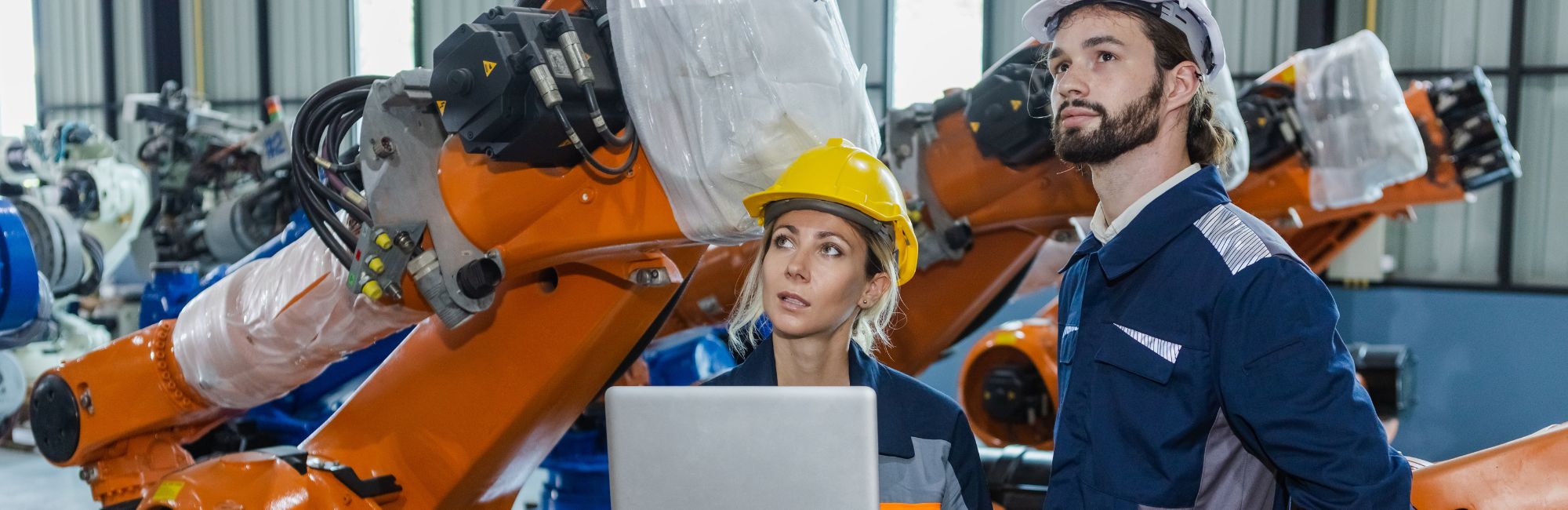
In today’s blog, we delve into a topic that’s reshaping the landscape of these industries: Industry 4.0. As technology advances at an unprecedented pace, it’s crucial to understand how this phenomenon will impact manufacturing jobs.
Industry 4.0, often referred to as the Fourth Industrial Revolution, represents the integration of digital technologies into the manufacturing sector. It encompasses automation, artificial intelligence, big data analytics, the Internet of Things (IoT), and other cutting-edge technologies. Unlike its predecessors, Industry 4.0 blurs the lines between the physical and digital worlds, revolutionising traditional manufacturing processes.
With the rise of Industry 4.0, the nature of manufacturing jobs is undergoing a significant transformation. While some traditional roles may diminish, new opportunities are emerging, requiring a blend of technical skills and adaptability.
Let’s explore how Industry 4.0 will impact manufacturing jobs:
- Automation: One of the most notable aspects of Industry 4.0 is the proliferation of automation. Tasks that were once performed manually are now being automated through robotics and advanced machinery. While this streamlines processes and improves efficiency, it may lead to a reduction in low-skilled, repetitive tasks.
- Skill Upgradation: Industry 4.0 demands a highly skilled workforce capable of operating and maintaining sophisticated technologies. As a result, there’s a growing demand for workers with expertise in data analytics, cybersecurity, machine learning, and other digital domains. Upskilling and reskilling initiatives will be essential for existing employees to remain relevant in the evolving manufacturing landscape.
- Collaborative Robots (Cobots): Unlike traditional industrial robots, collaborative robots, or cobots, are designed to work alongside humans. These cobots can perform intricate tasks with precision while enhancing safety and productivity on the factory floor. The integration of cobots opens up new possibilities for human-robot collaboration, creating hybrid roles that combine human ingenuity with robotic efficiency.
- Data-driven Decision Making: In the era of Industry 4.0, data reigns supreme. Manufacturers are leveraging big data analytics to optimise production processes, predict maintenance needs, and enhance product quality. As a result, there’s a growing demand for data scientists, analysts, and engineers who can extract actionable insights from vast datasets.
- Supply Chain Digitisation: Industry 4.0 extends beyond the factory walls to encompass the entire supply chain. From predictive maintenance to real-time inventory management, digital technologies are revolutionising logistics and distribution networks. Manufacturing jobs will evolve to encompass roles in supply chain management, logistics optimization, and strategic planning.
As Industry 4.0 continues to reshape the manufacturing landscape, companies need to adapt and embrace change. At Talent Media, we understand the evolving needs of the industry and are committed to connecting businesses with top talent equipped to thrive in the digital age. Whether you’re seeking skilled engineers, data analysts, or robotics specialists, we have the expertise to find the right fit for your organisation.